
Lithuanian Academy of Music and Theatre Campus

Lithuanian Academy of Music and Theatre Campus

The Institute of Lithuanian Literature and Folklore | Vileišiai Palace

The Institute of Lithuanian Literature and Folklore | Vileišiai Palace

Pastatai
T. Kosciuškos g. 23

Antakalnis Interwar Residential Complex

Explore architecture with LRT
Pritaikymas
Iššsaugoti
Pašalinti iš mėgstamiausių

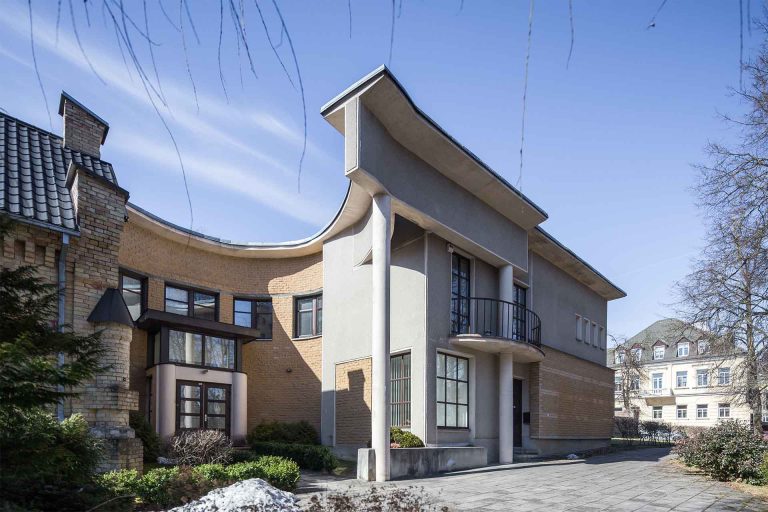
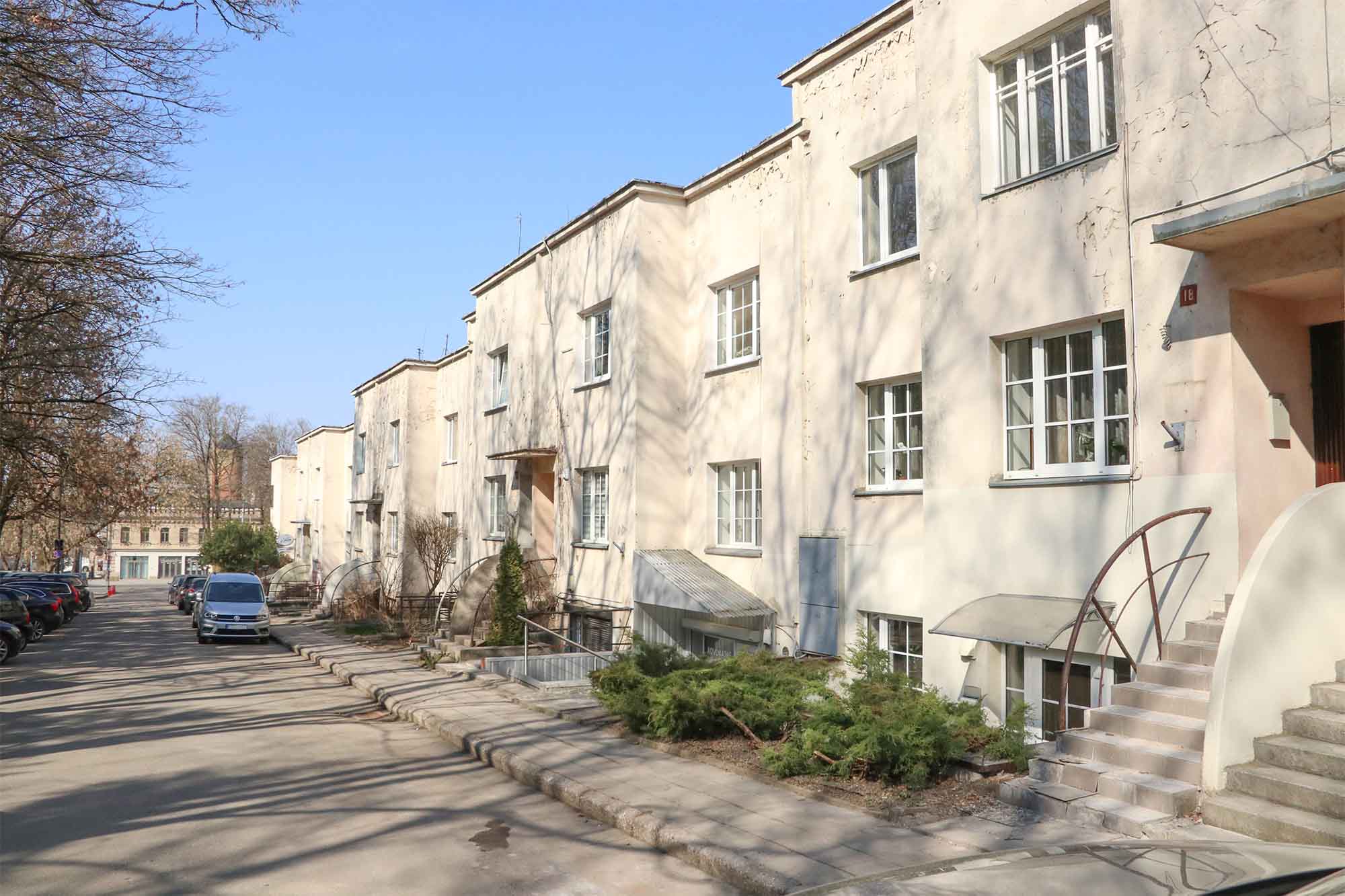
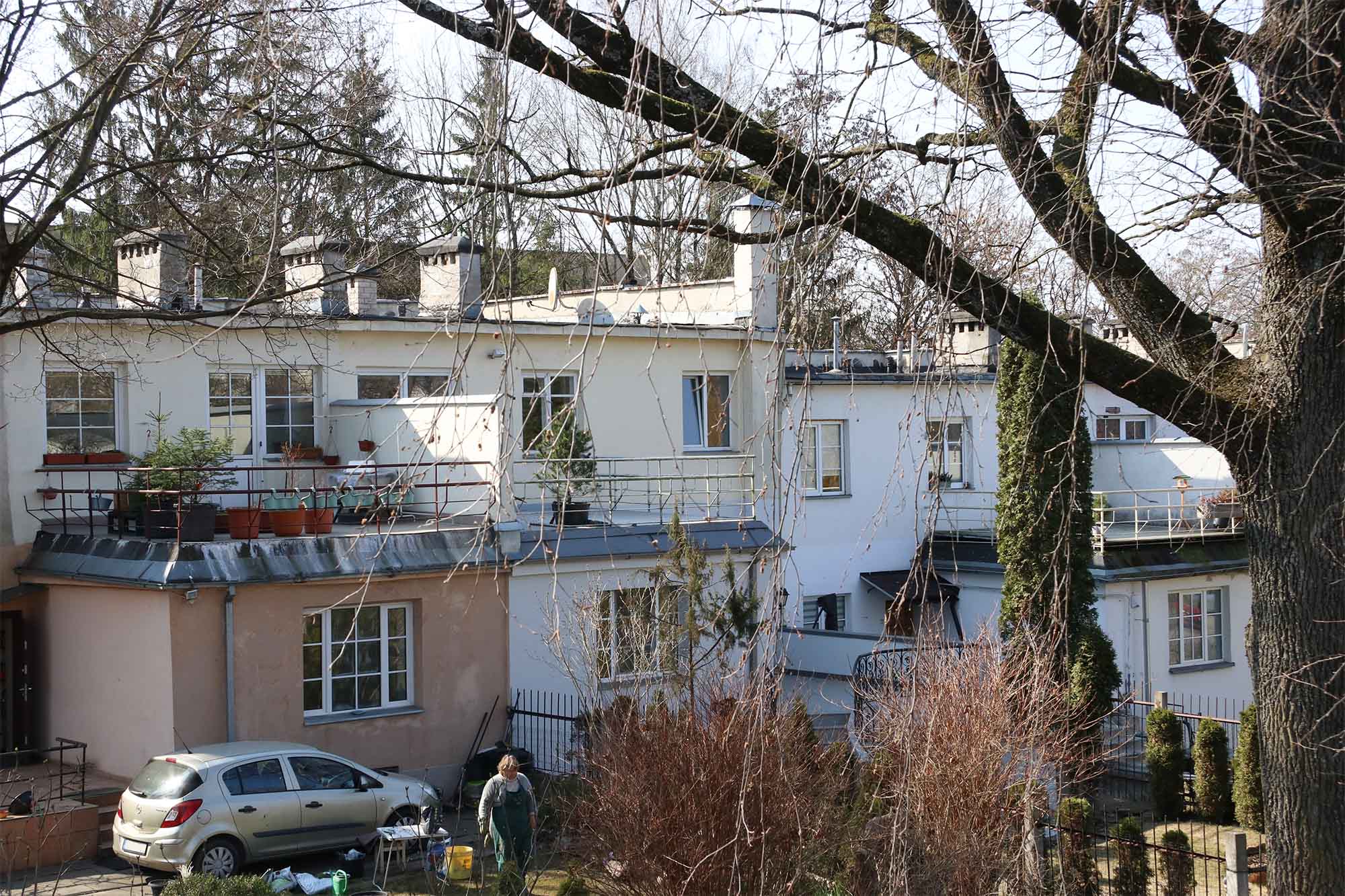
Located within the triangular block defined by T. Kosciuszko, Olandų, and M. Dobužinskio streets, this ensemble of 25 semi-detached houses is a stylistically unified example of interwar functionalist architecture in Vilnius. The houses are paired using a principle of mirror symmetry and arranged in short rows along the streets, with small garden plots formed in the courtyards. Each unit was designed as an individual two-storey dwelling with a basement.

The buildings are characterized by a strict, restrained architectural language: unadorned façades, rectangular windows divided into small panes, and flat roofs. At the time, they sparked debate – some residents criticised the white “boxes,” claiming they disrupted the character of Antakalnis.

The residential quarter was built between 1928 and 1932 by a housing cooperative of employees of the Ministry of Public Works in Vilnius. In the 1930s, the ideas of housing cooperatives and modernist residential colonies were particularly developed in Warsaw. This trend reached Vilnius, then under Polish rule, but did not spread widely. The Antakalnis cottages remain the only complex of this type built in the city during that period.

During the Soviet era, the houses were nationalised. In 1985, a reconstruction of the entire complex was carried out based on a design by Nina Masaitienė, dividing each floor into separate apartments.