 © Norbert Tukaj
 © Vytautas Luchtanas
-
Authors
ARCHITECTS – Danielius Rozenhauzas, Aleksejus Polozovas, 1903
-
Address and directions
Address:
Pylimo g. 39 / Plačioji g. 7, SenamiestisHow to get there:
Vingriai, Gėlių/Rūdininkų -
Visiting information
Visiting hours:
2026-05-17 11:00 - 18:00
Last tour on Sunday:
17:00Tours run every:
20 min.Tour duration:
45 min.Expected crowd level:
HighMaximum group size:
25
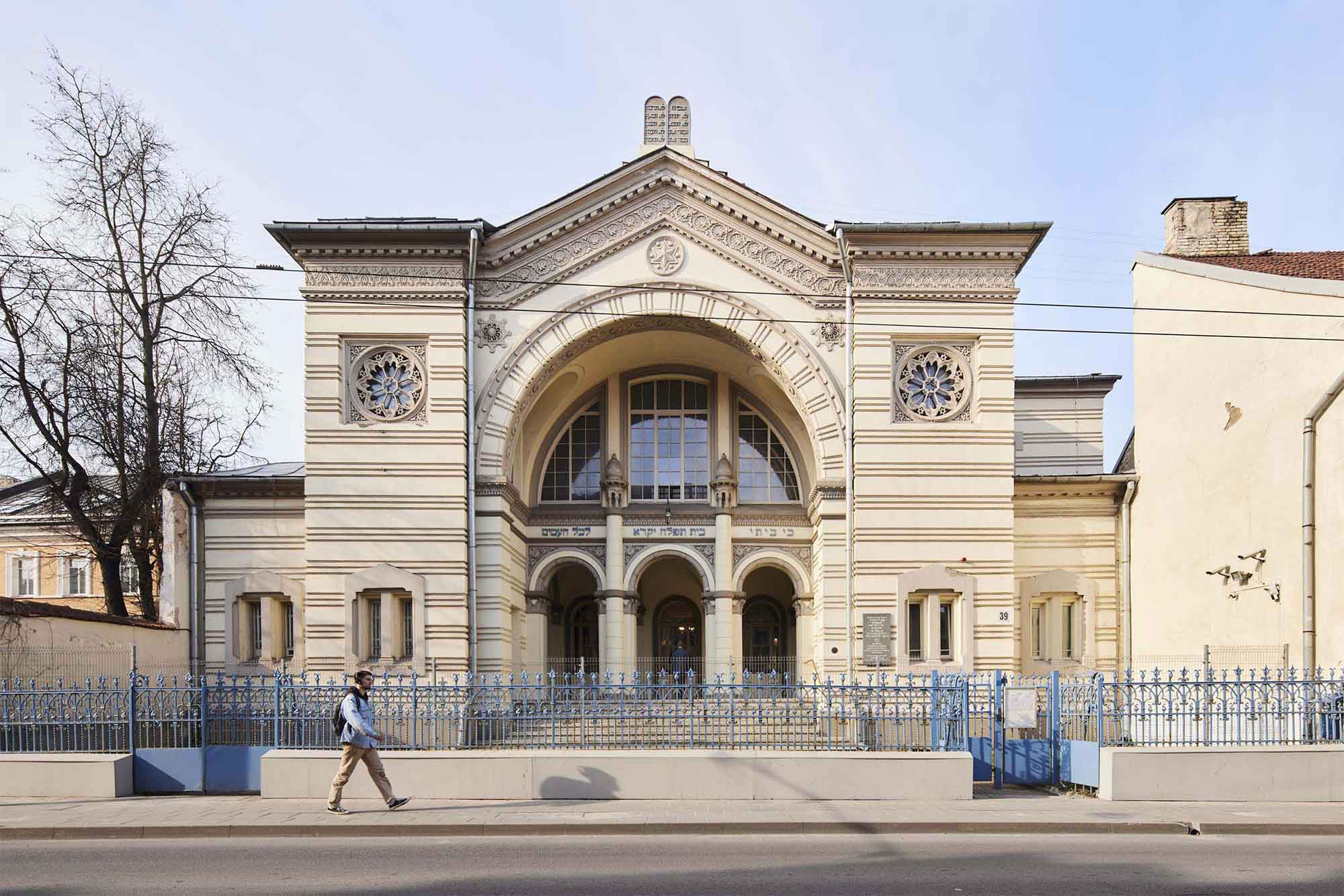
The Vilnius Choral Synagogue, standing tall between Pylimo and Plačioji streets, is the only synagogue left in Vilnius today, of which there were more than a hundred before the Second World War. This is important, because synagogues are usually identified as one of the mandatory attributes of every Jewish community. Synagogues have three functions: they are a place for prayer, learning and meetings of the community. The synagogue in Vilnius also provides the continuation of these functions.
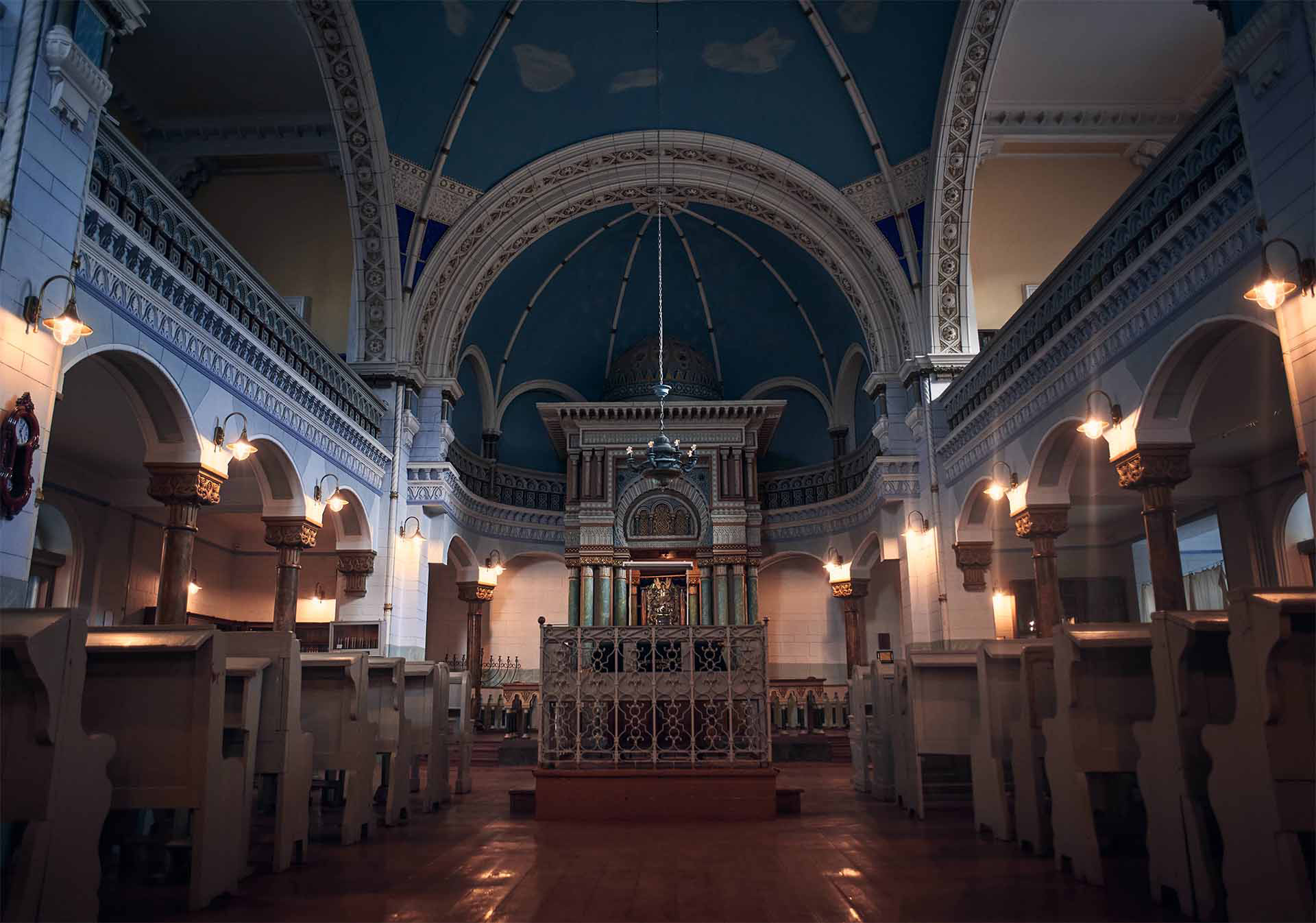
The Vilnius Synagogue is not a traditional synagogue as it was built by a community that practised Reform Judaism. The synagogue itself is attributed to the artistic style of historicism. Its architecture echoes the styles of the past: oriental, Moorish, Mauritanian – sometimes even referred to as the “synagogue” style.
The building is embedded in the perimeter of the street, but its volume and spatial composition blends into the neighbourhood in a rather organic way. Still, it clearly stands out from its surroundings in terms of its architectural expression and its exterior decoration with religious motifs. The Moorish-style interior has remained virtually unchanged over time, with its authentic colours, ornaments, décor, aron kadesh, bimah and original prayer benches. The memory of the ceremonial rites has also been preserved, while the house of worship, which adheres to tradition, continues to evoke the history of old Vilnius.