ARCHITECT – Viktoras Anikinas, 1963
ARCHITECTS OF THE RECONSTRUCTION – Joint Architects Workshop, 2XJ, 2016
 © Leonas Garbačauskas
 © Leonas Garbačauskas
-
Authors
-
Address and directions
Address:
Gedimino pr. 51, CentrasHow to get there:
Nepriklausomybės aikštė, Jokūbo Jasinskio, Alberto Goštauto, Juozo Tumo-Vaižganto -
Visiting information
Visiting hours:
2026-05-16 10:30 - 17:30
2026-05-17 10:30 - 17:30
Last tour on Saturday:
16:30Last tour on Sunday:
16:30Tours run every:
30 min.Tour duration:
60 min.Expected crowd level:
LowMaximum group size:
25
Accessibility

Save
Remove from favourites
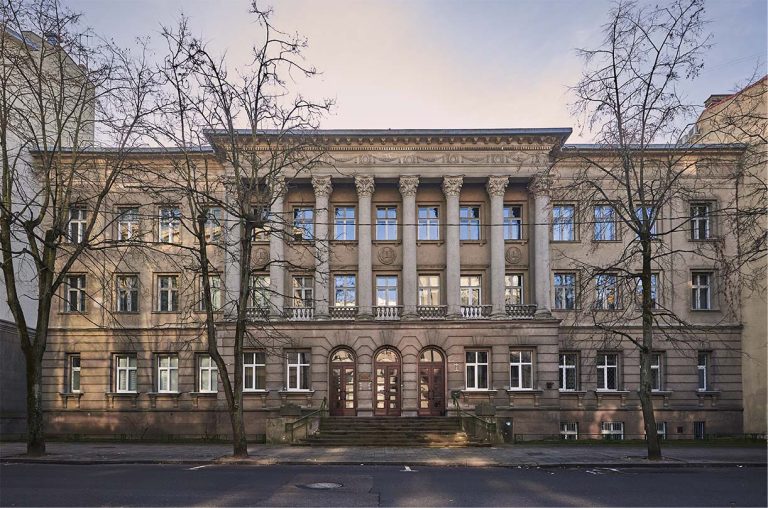
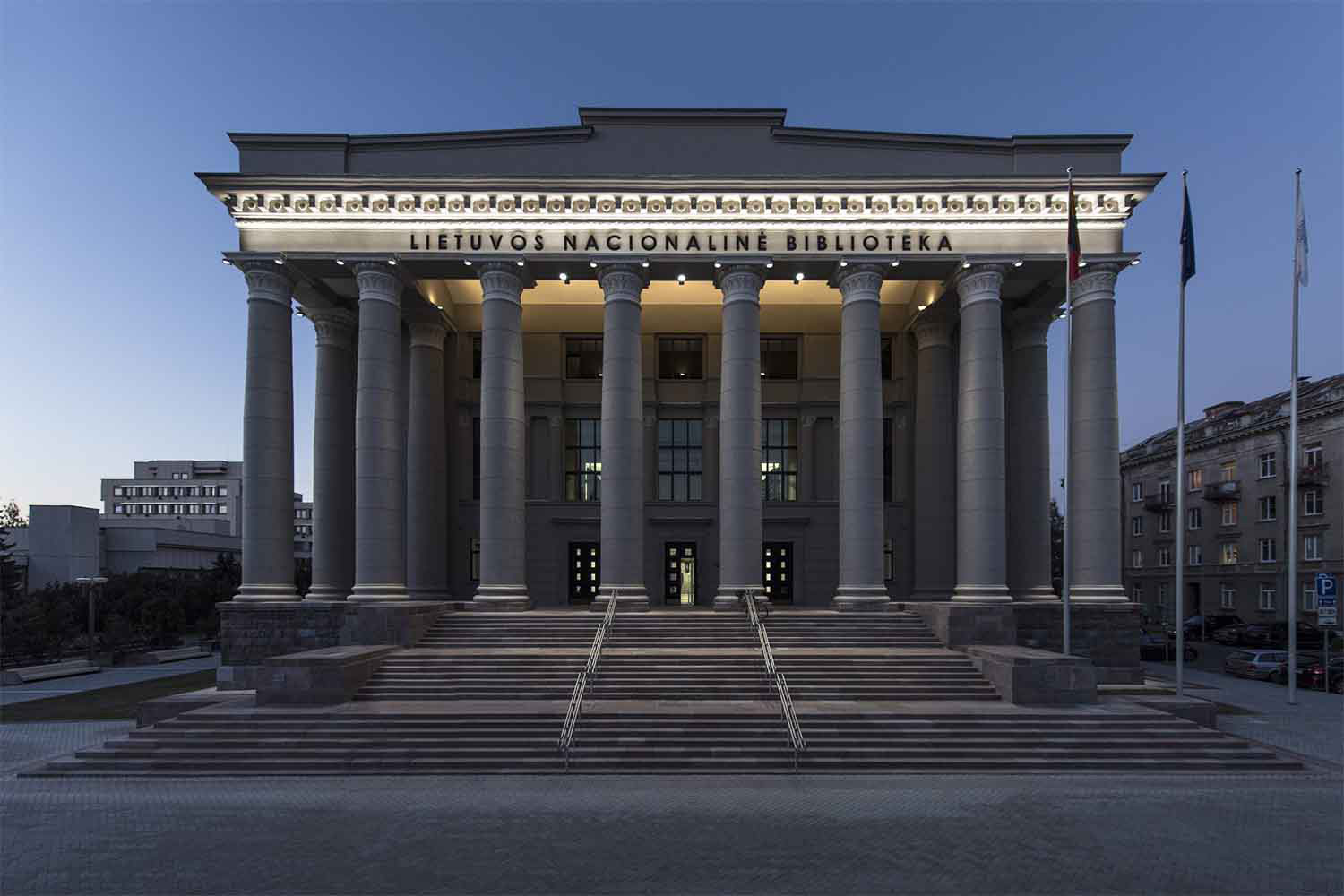
The Martynas Mažvydas National Library of Lithuania is a monument to monumental Socialist Realism architecture, which over the course of half a century has become a true symbol of knowledge and learning.
The original design of the library reflected the ornate style of Socialist Realism, but as construction dragged on, the decorative elements of the façade were simplified, and the interior began to show a shift toward Modernism.
After nearly a decade of construction, the building opened its doors in 1963 as the largest library in Lithuania at the time. It also played a significant urban role in shaping the image of one of the capital’s most important squares.
When the decision was made to renovate the building, the process took nearly as long as the original construction, and the renewed library reopened to the public in 2016.
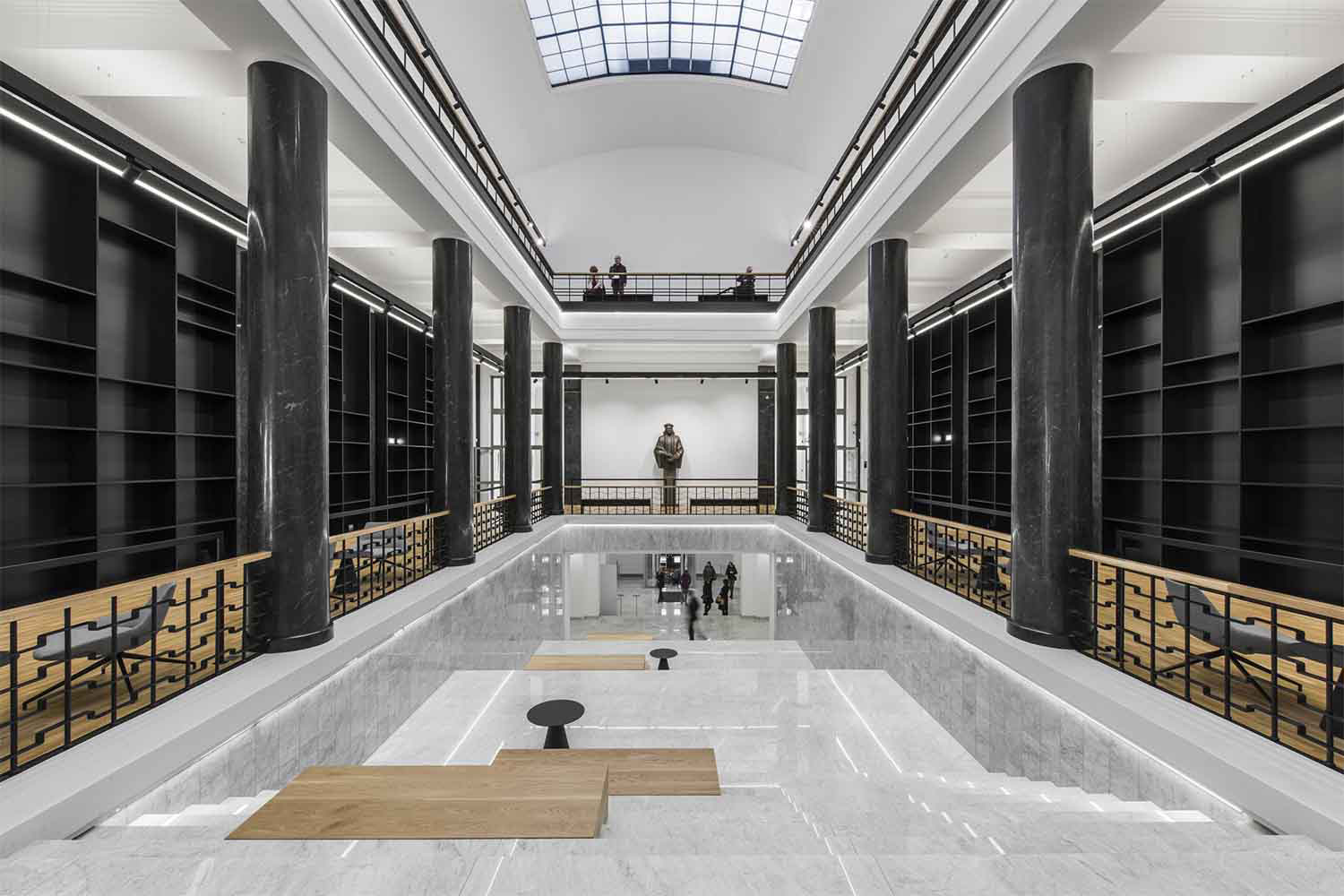
Now shining with a new light, the building captivates with its multifaceted character: behind its authentic exterior lie complex engineering solutions, and the contrasting interior blends heritage details with contemporary technologies. The library has become more open than ever – its reading rooms, art galleries, and exhibition spaces welcome hundreds of visitors, and the traditional image of the library is being redefined by a wide array of new functions and events.