 © Andrius Stepankevičius
Recommended by

-
Authors
ARCHITECTS – Archinova, Studio Seilern Architects
STRUCTURAL ENGINEERS – Sergejus Miakinkovas, Virmantas Juocevičius, 2021 -
Address and directions
Address:
Bokšto g. 6, SenamiestisHow to get there:
Rotušė, Užupio, Aušros Vartai -
Visiting information
Visiting hours:
2026-05-17 10:00 - 18:00
Last tour on Saturday:
-Last tour on Sunday:
17:00Tours run every:
30 min.Tour duration:
45 min.Expected crowd level:
MediumMaximum group size:
25
Accessibility

Save
Remove from favourites
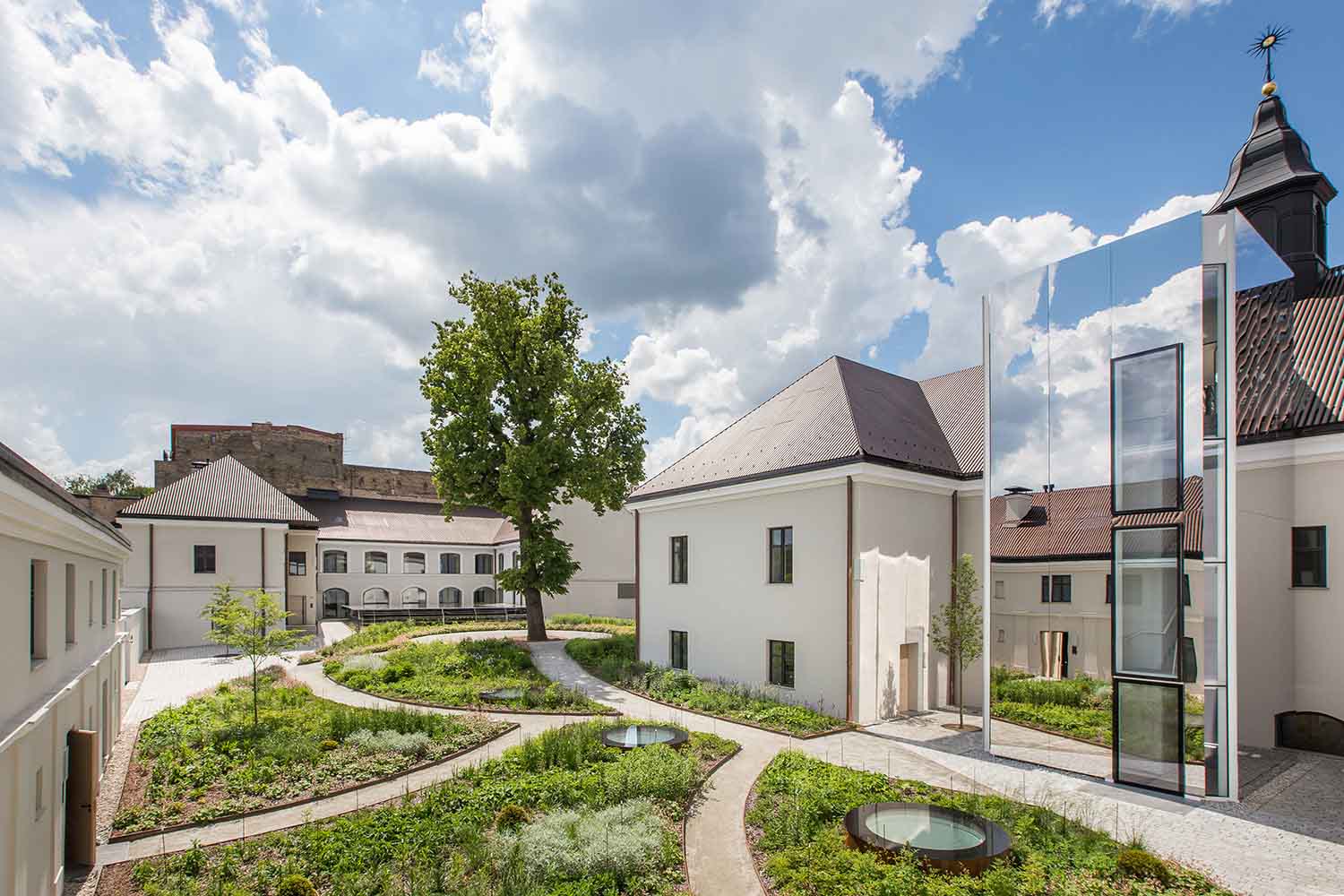
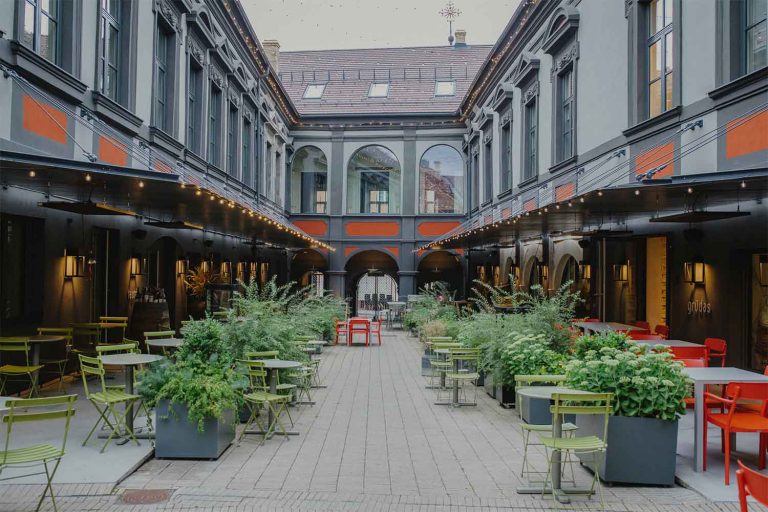
The Bokšto skveras (Tower Square) complex evolved over centuries from several historical estates, with brick structures on the site mentioned in historical sources as early as the 15th–16th centuries.
Though the complex has continually changed, its layout has adapted over time to the natural terrain, blending harmoniously with both the central part of Vilnius Old Town and the lower section near the Vilnia River.
In recent decades, the complex – once abandoned and formerly home to the city’s oldest hospital, which operated in the Old Town for centuries – has been transformed and brought back to life.
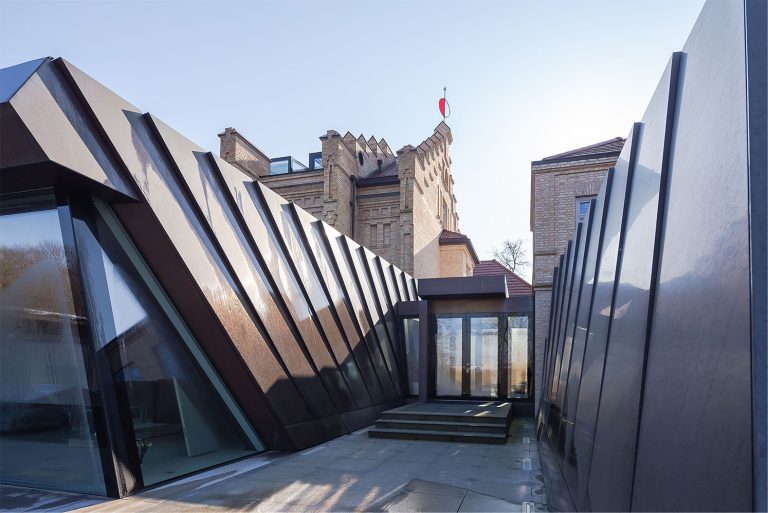
Special attention was paid to cultural heritage during the design process. Surviving drawings and architectural plans were used to restore both exterior and interior decorative elements, revealing important architectural features and adding Baroque-style rooftop turrets to complete the historic silhouettes. A courtyard centerpiece is an approximately 300-year-old linden tree, a living relic of the Old Town.
The restoration and adaptation concept made it possible to preserve the buildings’ valuable heritage features while creating a contemporary, functional space. Today, the complex serves a multifunctional purpose.
Bokšto skveras can be seen as a sensitive and sustainable example of reconstruction. Functionality is interwoven with clear aesthetics and luxury, yet special importance is placed on history and cultural heritage – with modern solutions used to highlight the historic character of the architecture.