CREATORS OF THE VILNIUS UNIVERSITY BOTANICAL GARDEN (recreating the Bernardine Monastery park-garden): botanists Stanisław Bonifacy Jundziłł, Józef Jundziłł, Karol Witzel, Stanisław Batys Górski, together with architects Marcin Knakfus, Mykolas Šulcas, Michał Kado, and Karol Podczaszyński (late 18th – mid-19th century)
AUTHORS OF THE VILNIUS CITY PUBLIC GARDEN: painter Alexander Strauss and engineer Feliks Jasinski, 1888
LANDSCAPE ARCHITECTS OF THE RESTORATION AND RECONSTRUCTION PROJECT : “Vilniaus planas” (design proposals – Giedrė Miknevičienė, Marija Nemunienė, 2007; technical project – Jurga Silvija Večerskytė-Šimeliūnė, Giedrė Miknevičienė, Modesta Dauderytė, Birutė Pečiūraitė, Aurelija Lozuraitienė, Kęstutis Labanauskas, 2009), implementation – 2013
 © GoVilnius
-
Authors
-
Dalyvavo renginyje
2025
-
Address
Barboros Radvilaitės g. 8A, Senamiestis
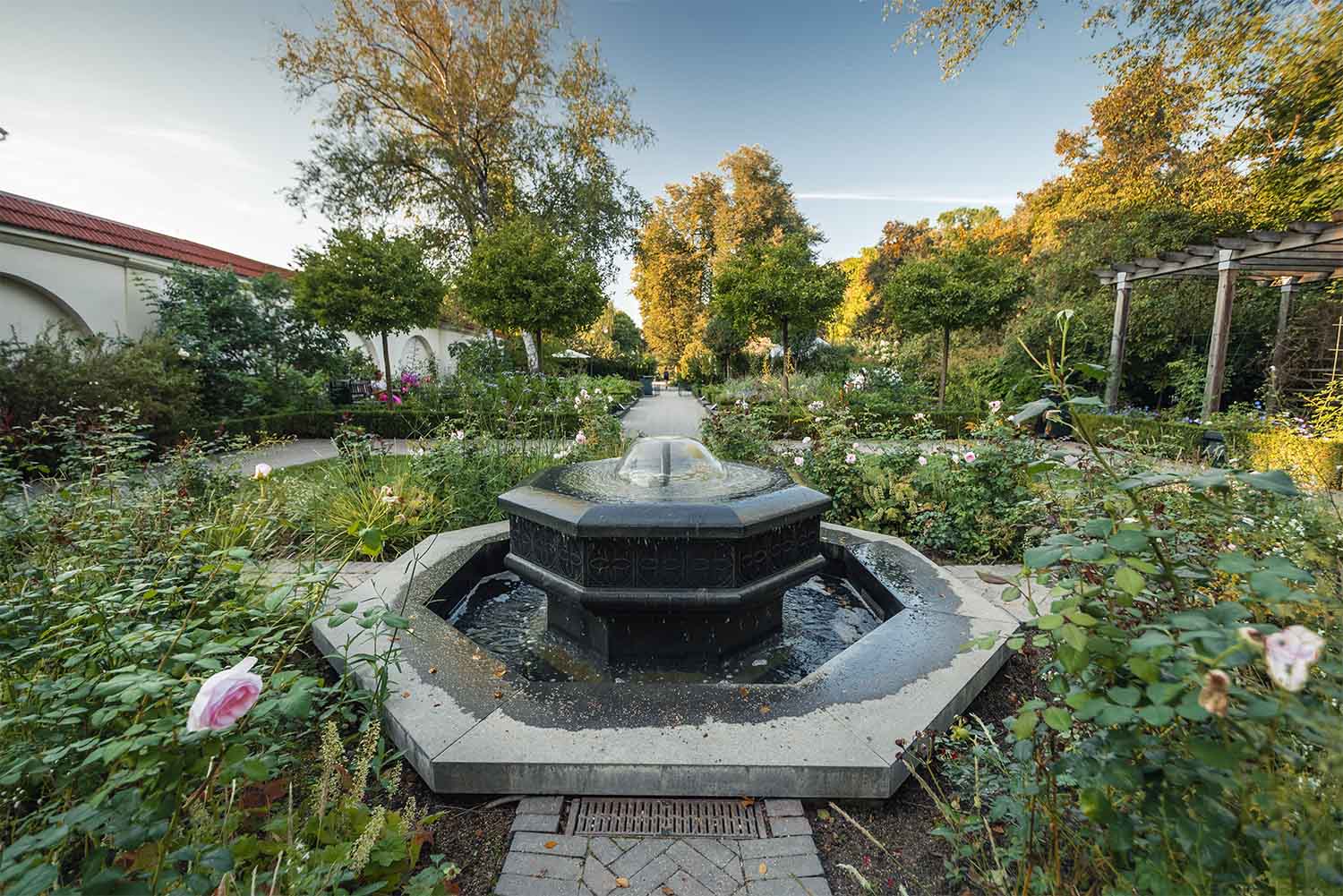
Bernardine Garden is the first public park in Vilnius and one of the city’s most significant green spaces. Its historical character is reflected in the restored 19th-century landscape, which showcases the architectural and planting styles of that era.
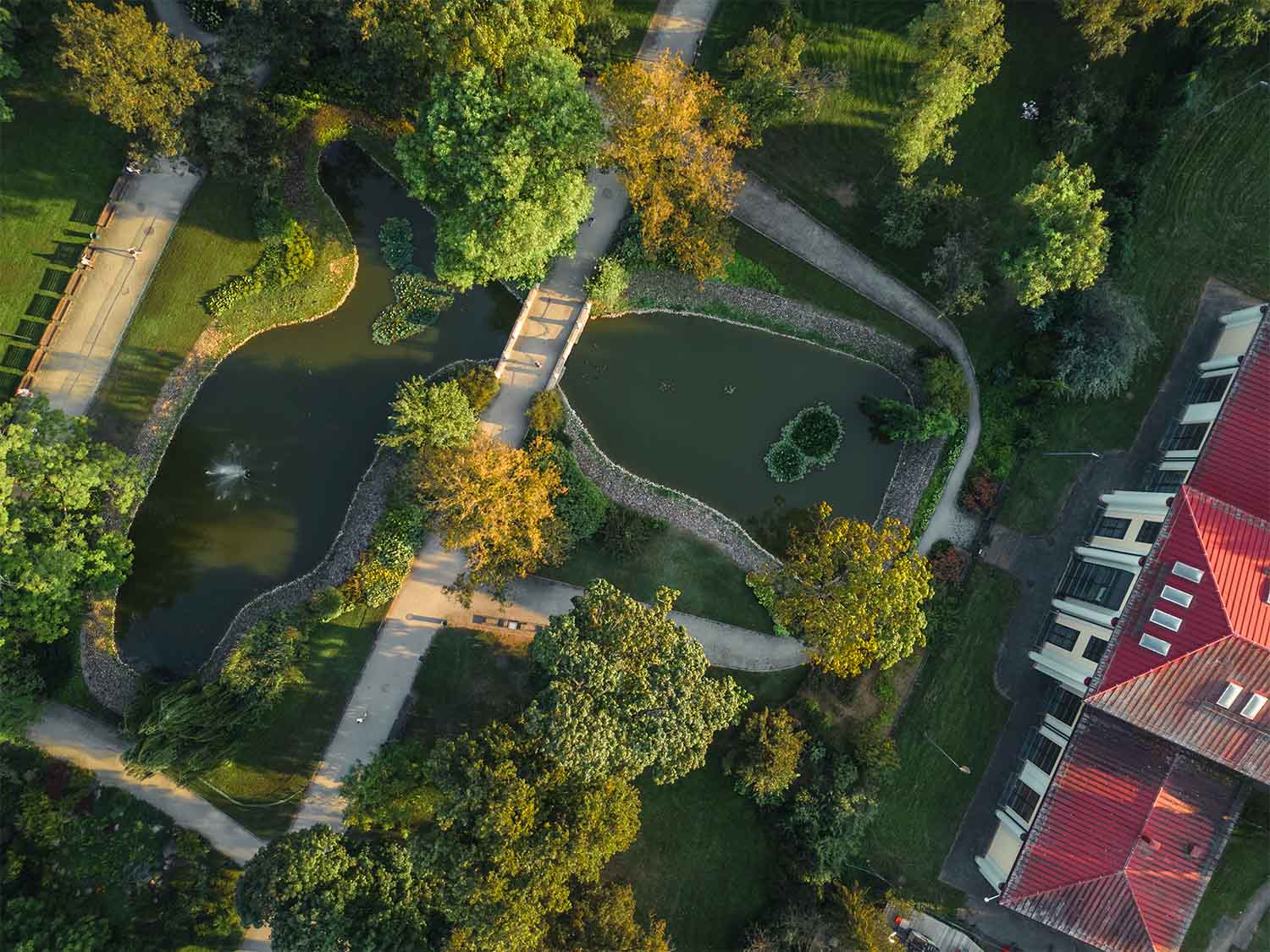
The historic greenery developed in one of the geologically youngest parts of the Vilnia River valley – within the Old Town amphitheater, a place where nature and human presence have long closely interacted.
The garden’s history dates back to the 15th century, when Bernardine monks were invited to Vilnius, leading to the construction of the Church of St. Anne, the Church of St. Francis, and the Bernardine Monastery complex. However, the area is also steeped in older legends – it is said that a sacred grove once grew here.
The territory lies within a loop of the lower Vilnia River – a naturally marshy and spring-rich area. These natural features were cleverly used in garden creation: fertile vegetable plots, canals, ponds, an apiary, and a greenhouse were all established here.
Today, the garden features two exhibition areas: a 19th century collection in the former monastery section and a botanical display that commemorates the 18th century Vilnius University Botanical Garden, once one of the largest in Eastern Europe.
Visitors can admire one of the oldest oaks in Vilnius or meet an exotic guest from the Far East – the Amur cork tree.